Intro
Hello and welcome back for another serving of Bacon’s Bits, the article series where I get to dig into a niche Underworlds topic and weigh in with my opinion. Today we’ll be discussing Nexus of Power now that it’s been out in the wild for a little bit. I don’t think I can recall a deck release in the second edition where there was a wider swath of opinions. I’ve seen some folks who think it’s too good, some who think it’s terrible, and the rest feel it’s somewhere in the middle. We’ll cover its advantages, disadvantages, and whether it’s in a good enough spot to be worth taking to a competitive event. This is well-timed considering G. just won the Alberta Classic while playing with the deck! Since we’ve already done a review of NoP previously, I will forego re-summarizing all the cards in the deck and instead focus more on how specific, unique cards the deck has on-offer impact its overall competitive viability/niche.
Highlights/Selling Points
Range Boost

Much like we saw when Raging Slayers came out, the primary output here is what the plot card allows you to do. Despite being limited to just Range 1 users holding treasure tokens, +1 Range is arguably the strongest plot card effect we’ve had so far in the second edition, which is noteworthy given that Deadly Synergy exists and we had a free re-roll from Raging Slayers up until recently. The ability to more easily attack and hold at the same time is a huge boon for those Flex/Take and Hold warbands that previously struggled to accomplish both. Despite not actually increasing your odds of hitting any given attack, the “hidden” value of allowing you to simply take more of them while still executing your “I move and squat this token” strategy inherently increases your damage output in a way that is often difficult to quantify. For example, if you are playing with Emberstone Sentinels—which I think most folks would agree is shaping up to be the best pairing for this deck—your early action steps are often best spent moving onto tokens to set up for some end phase scoring. While you’ll still likely be doing that early even with NP, the difference in a 1-hex threat bubble and a 2-hex threat bubble is massively impactful. Not only does it make it easier for you to make a charge onto a token (which can also further synergize with scoring cards like Sally Forth, for example) rather than taking a simple Move action, but it also increases the number of targets you can make your attacks against, which inherently restricts your opponent’s deployment/positioning. Beyond the early game considerations, another issue solved by the range boost is the classic problem that flex warbands can encounter where they have to make attacks and have to hold to score, but then end up having to leave their hard-won tokens just to make those attacks or stay on them while forgoing attacks. I’ve actually noticed this benefit most significantly when I play DS x NP pairings, as the extra range allows me to keep making united attacks with the same (often more dangerous) fighter rather than having to charge with them and then spread it around to other (often less dangerous) fighters in my warband.
Claimed – Passive Seed Glory

There are very few surges you can score while sitting at the back of your board in this edition without attacking or being attacked, and Claimed is one of them. In fact, you can count them on one hand (if you ignore underdog conditions): Delving for Wealth, Share the Load, Low on Options (which is slow unless you drew a ton of ploys in the first round), Power in Numbers (only with some specific warband/deployment caveats), and, now, Claimed. Sure, we have plenty of easy surges like Get Stuck In where you can just draw it Round 1 and be near-100% confident that you are going to score it, but what Claimed and the others I’ve listed offer is the ability to start putting down impactful 1-glory upgrades without needing to roll dice or push forward to interact with your opponent at all. In fact, if they don’t flip down the correct tokens during deployment, you’re very likely to just score this card immediately following their first action step. If they went first, you might end up with the luxury of getting to use a card like Hidden Aid or Accurate for the entirety of a game. I highlight cards which grant you accuracy here because, perhaps even more so than in first edition, it feels like this game snowballs pretty hard when you hit your first attack or two. Slanting those odds to be appreciably better than the standard 40 to 50%-ish that you’re typically throwing R1A1 means you will likely get your snowball rolling first, so cards like Claimed which can accomplish that without any real positional commitment on your part can immediately put your opponent on the back foot.
Pilfer – The Second Sidestep

It’s not like we haven’t seen additional Sidestep-adjacent cards before (think cards like Diving In, A Step Ahead, etc.), but the positional restrictions on the existing cards, particularly with respect to how they factor in the positioning of other fighters, can, at times, disable a core function of the card from a standard hold gameplan, which is the ability to get back onto a token to secure end phase scoring. Given the limitations associated with these other cards, oftentimes Sidestep is the only card your opponent has to factor into their math when targeting which tokens they expect you to be holding. In fact, I would wager that my most asked question during games in the second edition is “have you played Sidestep yet?” While obviously not quite as flexible, Pilfer has the ability to perform that same all-important function in supporting your hold gameplan, regardless of territorial requirements or positioning of other fighters on the board. The consistent ability to “correct” for getting pushed off a token at the end of the round (whether via attack or a card like Lure of Battle) is worth a lot more than you might expect if you just consider the effect of a 1-hex push in a vacuum. While I do wish the card just said “feature token” instead of specifying treasure, the ability to double up with Sidestep gives you a level of redundancy that your opponent is likely unable to disrupt without simply killing your fighter and is undeniably a unique edge you don’t get in other deck pairings.
Starmaw – Best Weapon Upgrade in the Game?

I was very positive on Starmaw in my review article, but I think playing with the card has so far revealed that I actually may not have been high enough on it, which is remarkable considering I essentially projected it as a top-3 weapon upgrade in the game. While the weapon’s profile itself is obviously super juicy when it’s practically always 4R/3H/1D with stagger, what I don’t think I highlighted well enough was just how many objectives this kind of card allows you to score. Pretty much any “make an attack” surge that doesn’t specify use of a melee weapon instantly becomes more achievable once this card goes down. This is not to say that the affected surges were necessarily difficult to achieve without this card, but the trivialization of something like Get Stuck In or Aggressive Defender is incredible. For PtG patrons, you will have seen a recent battle report where I play Kainan’s Reapers in which an accurate ranged weapon like this (Nohem’s inspired attack) significantly reduced the need to commit my fighters into awkward or exposed positions while still scoring my objectives. In particular, opposing Deadly Synergy suffers quite a bit when you can pick fighters off from a distance in a manner that won’t offer them united clapbacks. The range can force those playing DS against you into some very awkward situations when it comes to their “make united attacks” type of scoring since you don’t necessarily need to go to them to apply kill/scoring pressure. When the accuracy and range are this much better than your typical 2H or 3S attack, the low damage is almost irrelevant, particularly if your warband is prone to leaving fighters vulnerable anyway. For example, if your warband’s attacks are generally capped at 2 Damage + grievous, this is a great way to throw out either a pretty accurate finisher against 4-Health fighters or to set them up with a damage and a stagger so that the 3-Damage follow-up takes them off the table. And all this without (in many cases) even needing to charge, freeing the equipped fighter up to do more work throughout the course of the round. If you haven’t had the pleasure of using the card yet, I highly recommend you take it for a spin to experience the play line flexibility for yourself.
Challenges/Pitfalls
Start-of-Game Token Flips
The plot card token flips are the thing that, for me, pushes the deck from something that almost everyone could use (though still not overpowered, by any means) to a niche partner for the “right” warbands. I’d say the most common token deployments generally leave you in a 2-1-2 type of token setup, which means your opponent can very easily flip down the two most useful tokens for you in the matchup. While these are oftentimes the two that are in your territory, it is certainly possible the midline token is a better option to deny a Range 2 attack, for example. Certain warbands can also really abuse the flips to punish NP. Think about the typical Soulraid or GSP play lines. They can flip the two in your territory, then, in their first turn, walk to the midline token and delve that down while pushing onto the two tokens in their territory. By the end of their second turn, they could very conceivably have all 3 other tokens occupied with their fighters and flipped to cover. Good luck making your covetous attacks then, particularly if you don’t have ranged attack access in your warband. Even getting your own tokens flipped up in these cases will often force you to spend some early Sidestep plays and/or warscroll abilities, resources you would generally prefer to save for later. I don’t think these flips totally bury the deck by any means, but they were not needed. It feels like an overcorrection to slow down early Claimed which not only, for practical purposes, typically fails to do so for more than one turn, but also unnecessarily disrupts what I would otherwise describe as “fair” work to score the rest of what the deck asks from you.
Counterplay
This next section goes pretty hand-in-hand with our last discussion. As with most new decks, people need a little bit of time to adjust to countering its desirable play lines. I’ve seen a few folks suggest that NP scores too easily, but when you look at some of the decks which have come before, this is simply not the case for the majority of the deck. There are very few cards you can score without interaction in this deck. I have played NP almost exclusively since its release and, while I certainly enjoy using it, there’s always a great deal of setup to score my non-Claimed objectives or, in many cases, instances of my opponents missing opportunities to deny me that scoring. This is not a knock on them as players, just a note that they may not yet have been familiar enough with what the deck is trying to do to actively stop me. Not to get too self-referential in this article, but there’s another great example of this in a patron game that Val (who is a great, Worlds-level player in his own right) and I played shortly after the deck’s release. In it, I’m using ES x NP Velmorn and Val has a fighter standing on a treasure token in my territory. I rock up to hit him at Range 1 and score Seized (also, I think, having used Defiance on the attack). Almost immediately afterwards in the power step, Val comments that, had he delved, he would have prevented that from happening. Yep. Nothing complex or earth-shattering there, just simply delving would have robbed me of a die on the attack, the scoring of a surge, and one attack made towards Close the Vice. I’m sure that’s a mistake he will not make in the future once he becomes more comfortable using and playing against the deck. It’s even one he might have “accidentally” prevented if he had been playing PnP and just planned to delve for his own purposes anyway.
If you feel like NP is scoring too easily against you, I highly recommend playing it for yourself. I always feel it is easier to understand how something is countered when you play it yourself, whether because you struggle as you watch your opponent literally countering your scoring, or because you inherently worry about “that thing” they could do on their turn that would totally mess you up, even if they don’t make that play themselves. It’s so easy to come out of those moments at times and think “phew, they didn’t see it,” then move on. However, in the larger context of your development as a player, it is important to bank those memories for when you are on the other side of the table and work them into your game plan. This deck is no exception to that experience and is far more heavily impacted by that game knowledge than something like PnP scoring, for example. I might know what PnP players are trying to score, but that does not mean I always have agency in denying it, even if I know exactly what is in their hand. While there are certainly things an NP user can do to promote scoring their cards (as there should be), your level of agency is much higher in making sure they can’t get covetous attacks or, if they can, forcing them to be lower output attacks like Range 3+.
Lack of “Staple” Cards
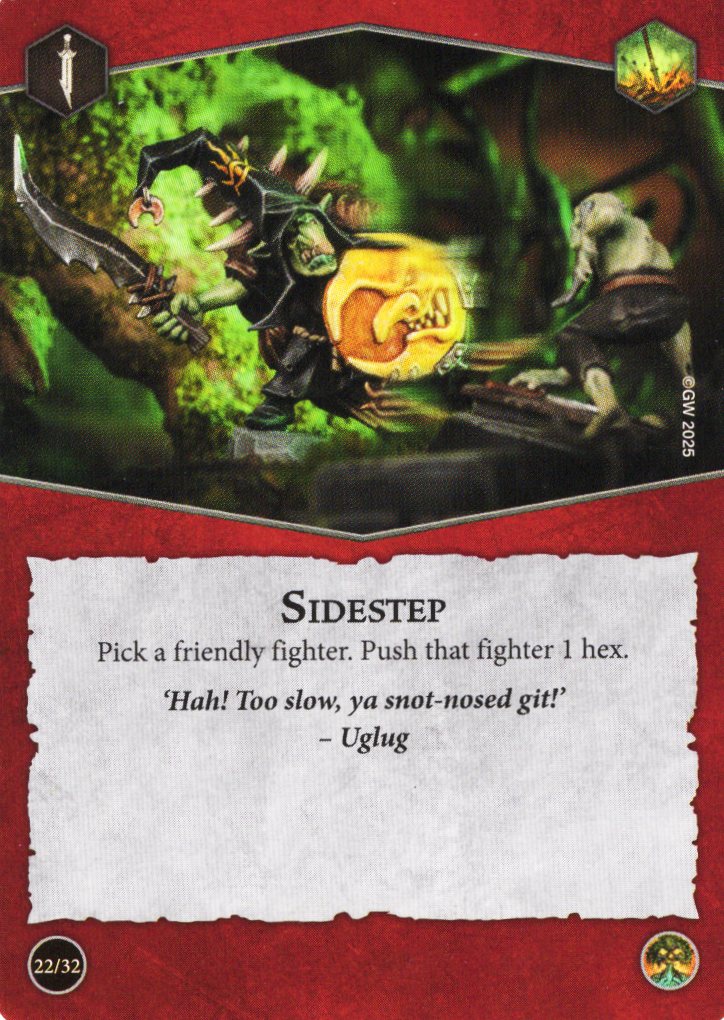
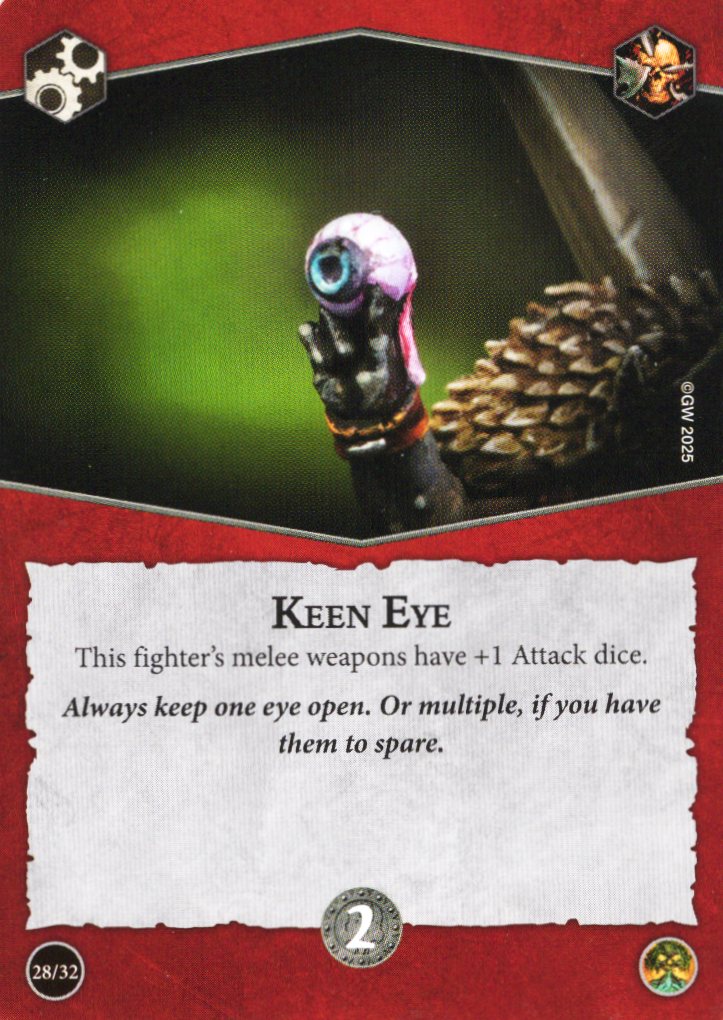
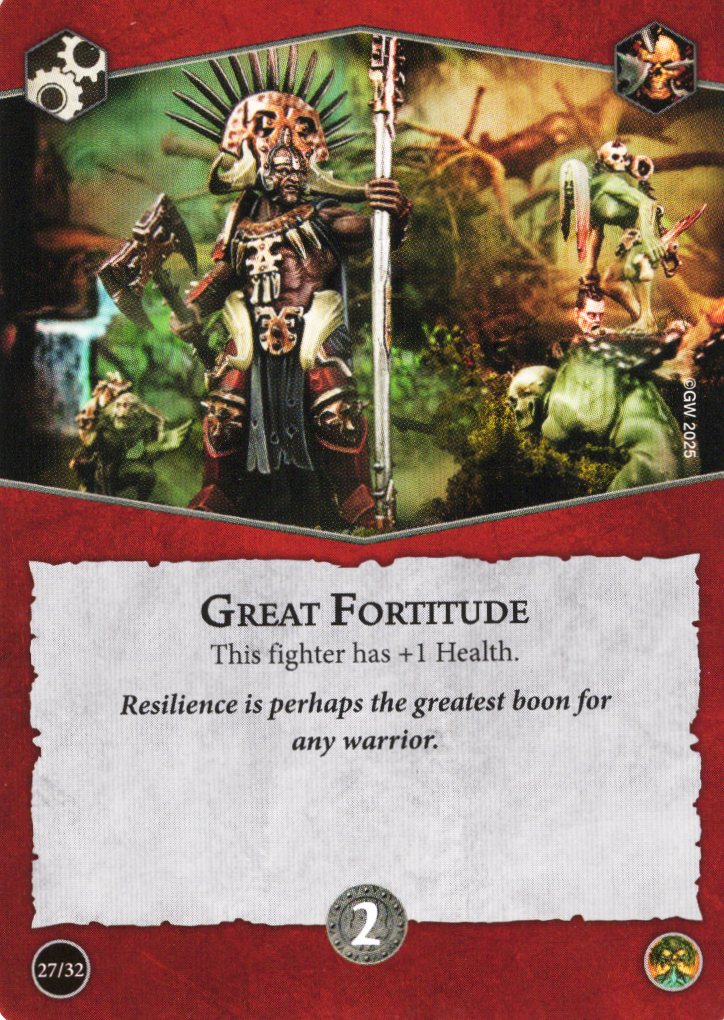
Deckbuilding in Underworlds has always gravitated towards cards that provide the most consistent results, often favoring simple cards that have universally applicable effects. It’s never bad to be able to push your fighter 1 hex, to heal them, to make their attack more accurate, etc. As “boring” as such cards can be at times, it’s actually quite rare to find cards with more complex or interesting effects that exceed their value, and this is an area where NP tends to falter. Despite some of the cool things it has on offer, it lacks some key effects: heals, +Dice or other accuracy upgrades (unless you count Starmaw), +Health upgrades, “push after an attack” upgrades, and movement upgrades, to name a few. Even when it does mimic these more universal effects, such cards come with caveats/downsides: Pilfer vs. Sidestep, Defiance vs. Determined Effort, Into the Deepwoods vs. Shields Up!, I Like Those Odds vs. Sharp Reflexes, and Spiteful Defender vs. Great Strength. In all of these cases, we see lesser versions of cards which are available elsewhere. That doesn’t make them into inherently bad cards, particularly because it allows you to build more redundancy of these desirable effects into your Nemesis deck, but it does mandate selection of certain deck partners which can help you “catch up” to other conventional decks in terms of power card efficiency. This is particularly true in cases where you might have some “non-negotiable” staples that your warband requires to function. For example, I find it very difficult to recommend playing Kainan without access to, at a minimum, a heal, Great Fortitude, Commanding Stride, and Keen Eye. Since NP offers me none of those (nor comparable cards to replace them), I would now have to go out and find a deck to pair in which offers me all of that stuff (spoilers: the only one that specifically offers all of this is Blazing Assault), which can really restrict your deckbuilding choices and force you into compromising other areas of your deck to pack in cards that most other pairings will just have lying around to scoop up.
Conclusion
Well, you’ve now read about 2500 words of good stuff and bad stuff about this deck, but where does it sit competitively? Overall, I think this deck is absolutely good enough to be win a major tournament. While it does have the notable flaws I’ve pointed out, the foundational Rivals decks you could pair it with which I highlighted in my initial article (BA, ES, PnP, CtC, and DS) fill those gaps quite well, as do certain warband/warscroll synergies. Having played with the deck quite a bit now, I think our initial take of ES being the optimal pairing has been mostly correct, as it offers an excellent combination of those “staple” cards I mentioned earlier that NP is lacking and more passive scoring which can be used to force your opponent to step up so that you can start scoring your more interaction-dependent NP cards. If an NP pairing is likely to show up on a podium, this is probably the one that would make it (as evidenced in Alberta). That said, I wish I had more strongly championed the DS x NP pairing on release, as, while this one is a bit more reliant on forcing interaction (and therefore more dependent on warscroll support which can help you do that), I’ve found it to be quite effective, particularly because that extra range can make it a lot easier just to make united attacks. We often talk about pairing cards which can score from the same board state, and DS x NP scoring mirrors this in that the same attacks which qualify for DS scoring conditions can often also be made to satisfy NP scoring concurrently. By that same token, this inherently makes it more susceptible to counterplay than ES x NP, which does give it a lower floor even though I believe the ceiling to be comparable to that of ES x NP.
That’s all I’ve got for this time. I’m very curious to hear from you all about what your NP experience has been thus far. Have you had much success using it? Do you find folks have started adjusting to playing against it yet? Feel free to hit us up on social media if you’re interested in sharing, but, until then, we wish you the best of luck on YOUR Path to Glory!