Intro
Hello and welcome back for another serving of Bacon’s Bits, the article series where I get to dig into a niche Underworlds topic and weigh in with my opinion. Today we are discussing the much-maligned Realmstone Raiders deck and essentially asking, “is it really that bad?” The only Rivals deck fully unrepresented at the World Championships of Warhammer, RR has earned itself a reputation as a deck that is too complex, too clunky, and results in too little output to be worth taking to a tournament. We’ll cover what the deck does well, where it struggles, and whether it could do with a buff. Let’s get started!
Highlights of the Deck
Raiding (Positive Variance)
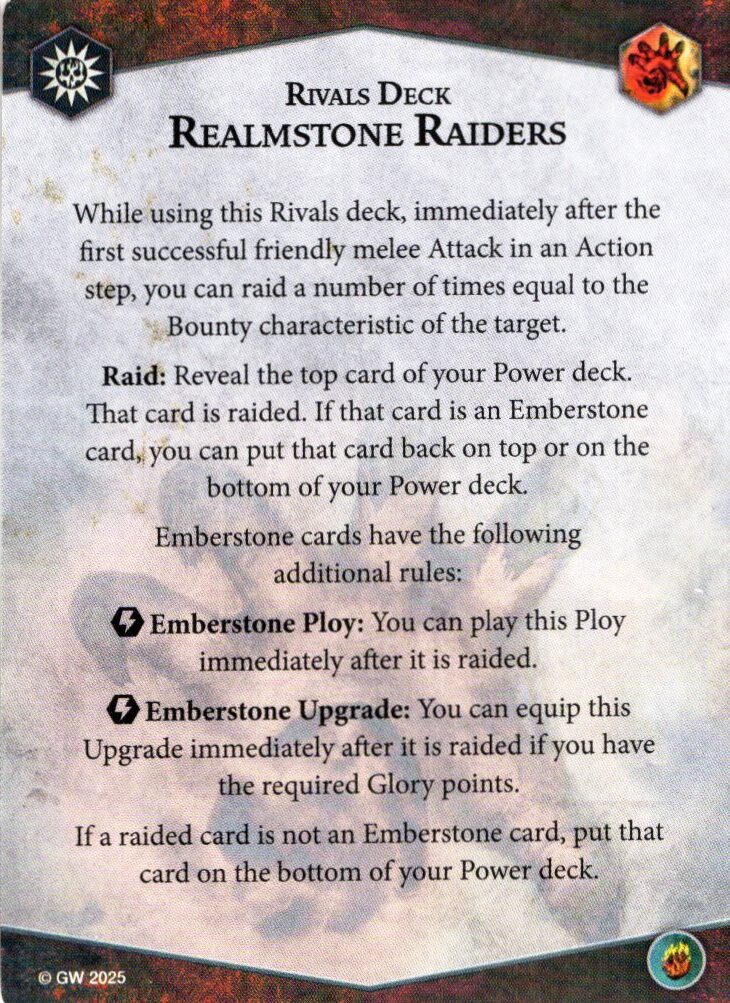
At its base level, raiding can provide one of the strongest effects in the game, which is free card draw. Hit an attack, raid an Emberstone card, play the card. When the deck sequences right, this can give you an important card advantage while also supporting the scoring asks from your objective package. In particular, once you’ve raided the right number of times/Emberstone cards, your end phase scoring can be board state-agnostic (i.e., you’ve already done what your cards needed you to do, and your opponent can no longer disrupt you) with cards like Realmstone Raid or Roused Violence. Of course, I’ve added an important caveat that we’ll dig into more later of “when the deck sequences right,” but for now we’re just covering the cards.
End Phase Objectives
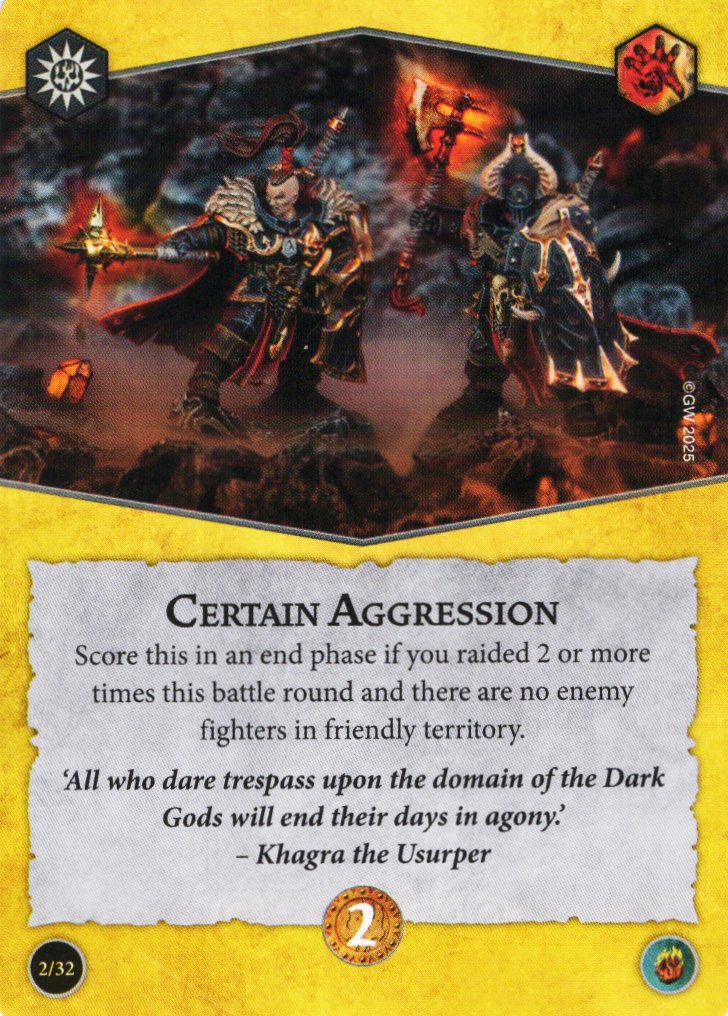
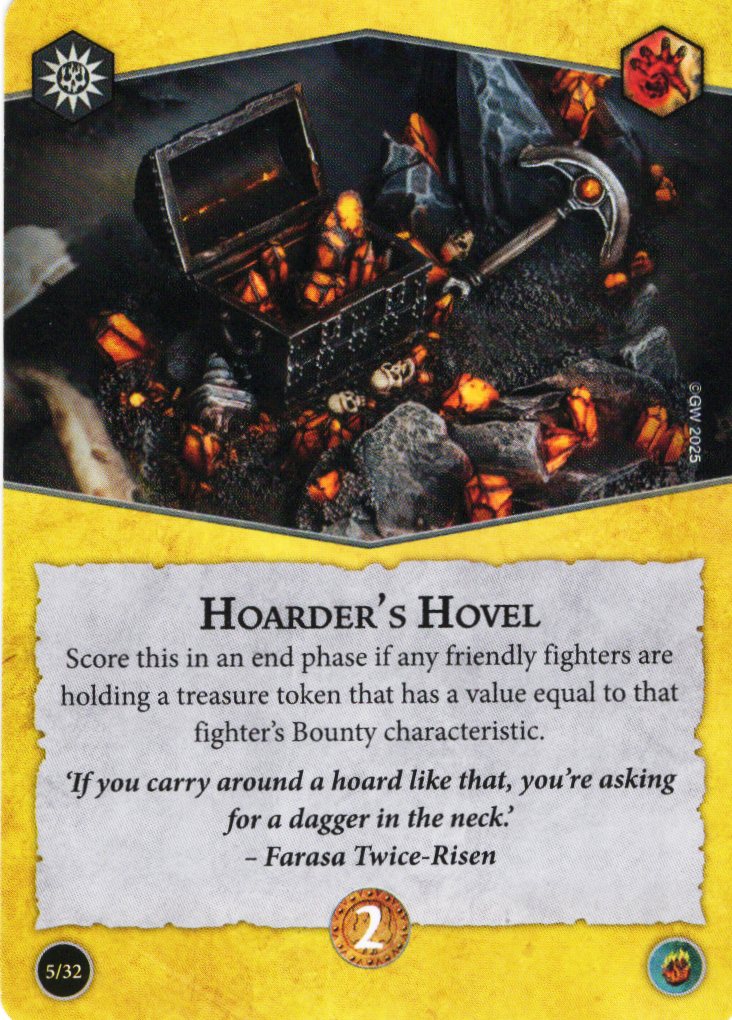
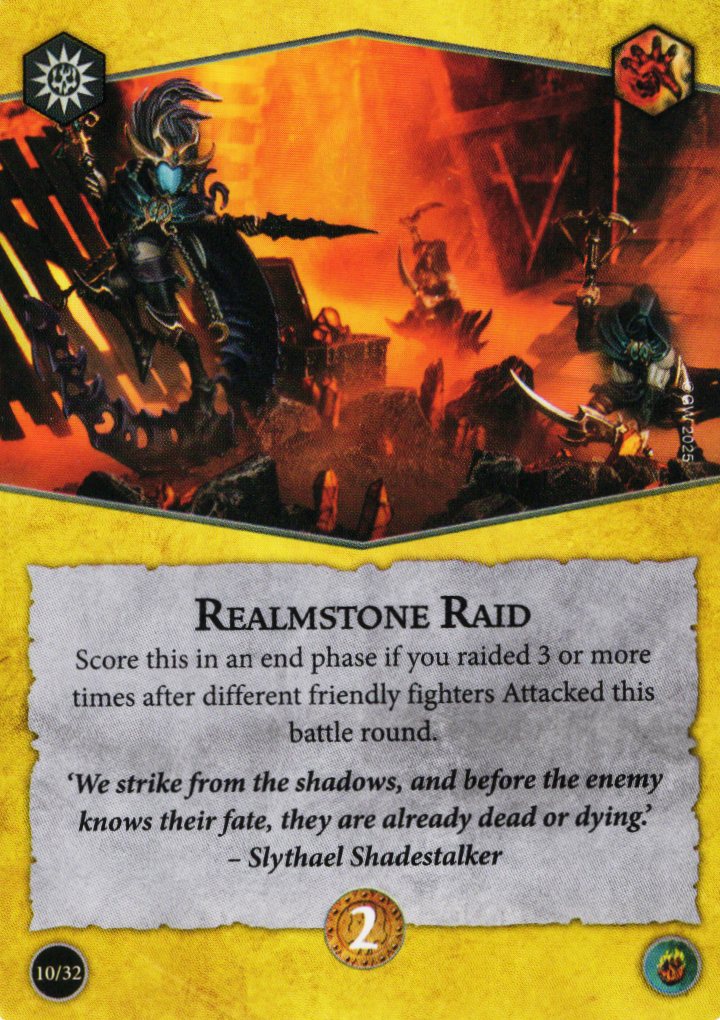
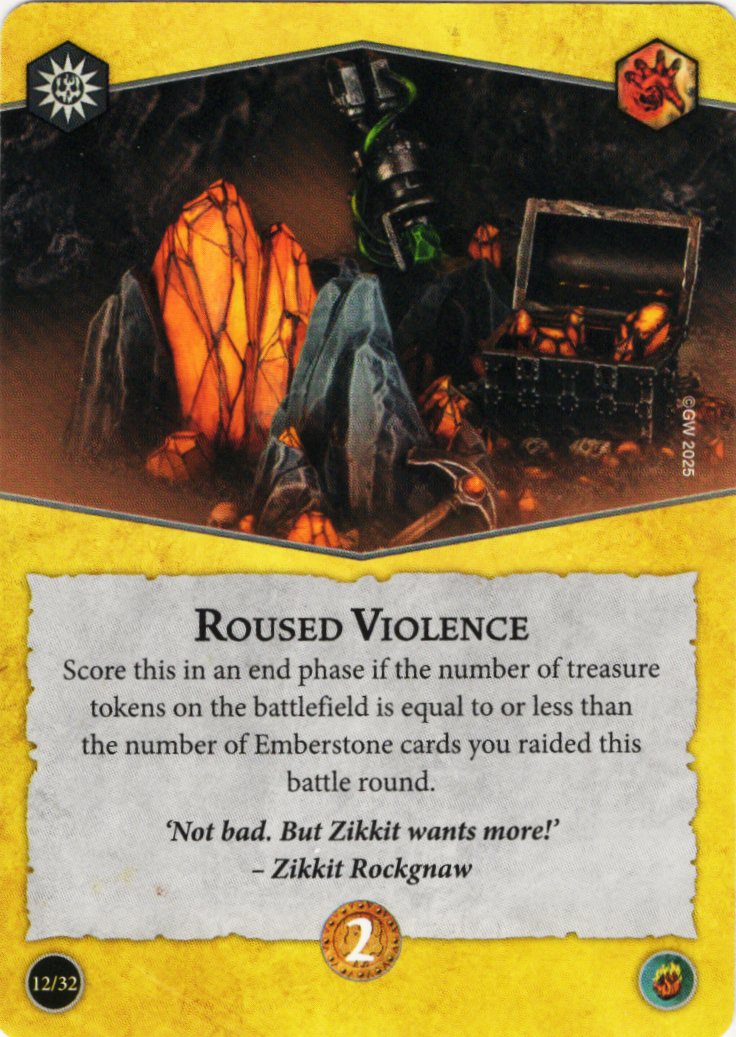
The end phases are actually pretty good motivation to play the deck, offering many warbands three pretty solid 2-glory cards in Realmstone Raid, Roused Violence, and one of Hoarder’s Hovel/Certain Aggression (maybe both if your paired deck has really poor end phase options). A theme of several Strike decks we’ve seen to-date is that their end phase scoring can be very lackluster, but their power cards can support significant accuracy and/or increase your warband’s capability for making attacks in the first place. Raiding can be a way to leverage those more accurate and frequent attacks not only to collect kill bounty, but also to rack up some additional glory from your deck.
Power Cards
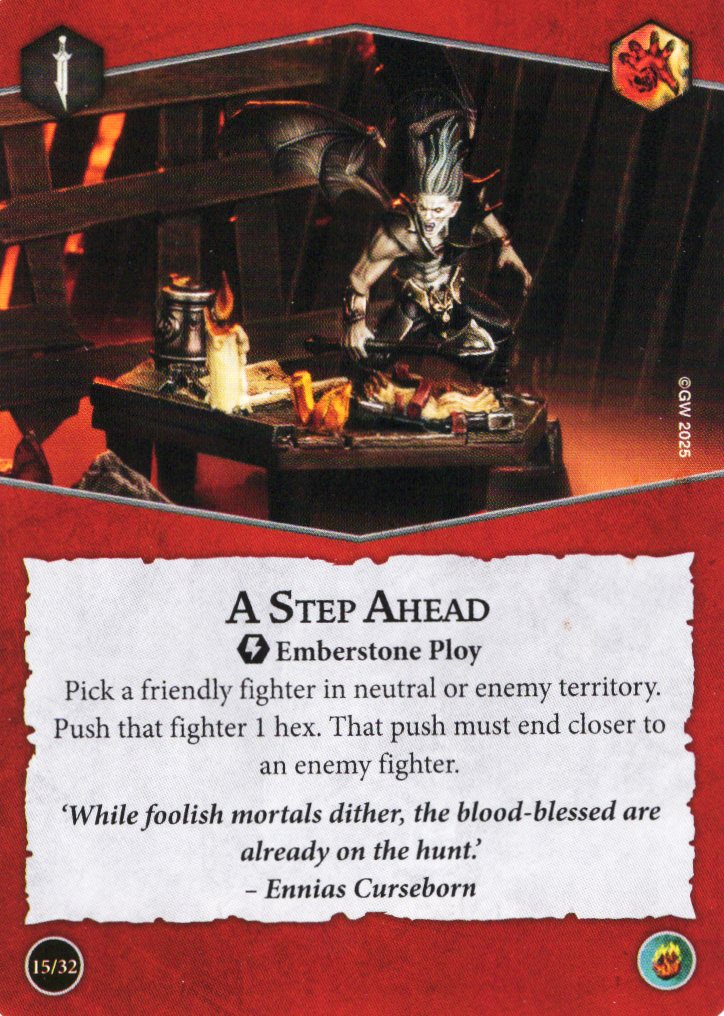

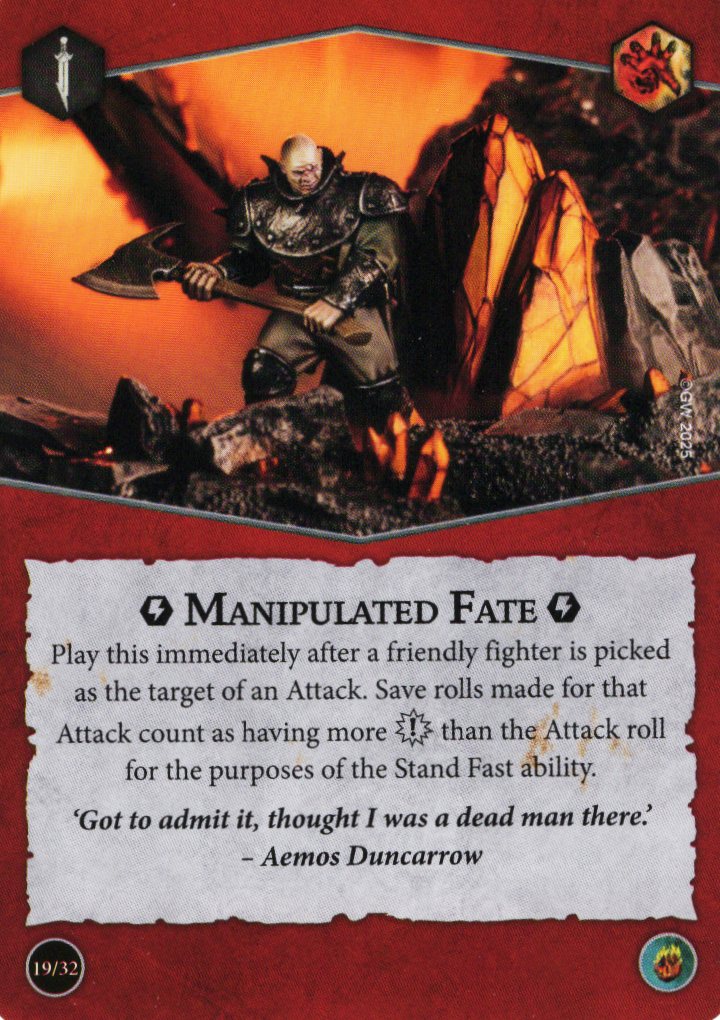
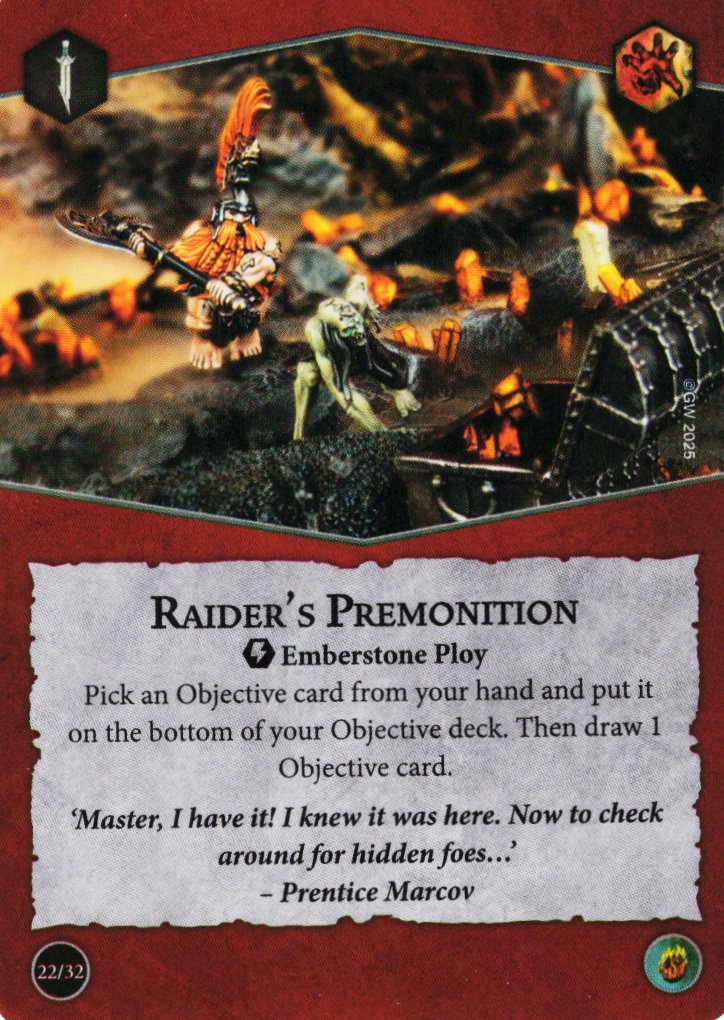
While some of the power cards in the deck are slightly downgraded versions of more universal cards, having access to them allows you to build in some key redundancy. For example, A Step Ahead is strictly worse than Sidestep, but the ability to take both can give you an edge in number of pushes that your opponent may not be able to match with their own pairings, especially given that you can get it out for “free” via raid. You’ve also got access to one of the strongest ploys in the game with Manipulated Fate, a decent ping in Fortune Faded, as well as one of the few objective deck manipulation abilities in the game with Raider’s Premonition. Lastly and perhaps most importantly, even if the Emberstone upgrades don’t do it for you, RR is one of only 3 decks in the game that gives you access to all three of Great Fortitude, Great Strength, and Keen Eye in the same deck, so if you’re not using Blazing Assault or Emberstone Sentinels in your build, this can sub in for those key upgrades.
Issues with the Deck
Raiding (Negative Variance)
As I hinted earlier, the potential downsides of raiding are where the deck starts to fall apart, and I’d say the negatives tend to outweigh the positives here, unfortunately. We talked about having good deck sequencing, but the case of bad sequencing is arguably more common and the performance scalar more significant. Sometimes you draw all of your Emberstone cards into hand and therefore have none to raid to score your objectives. Similarly, you might raid important non-Emberstone cards (I swear my hit rate on turn 1 raiding Manipulated Fate is like 85%) and send them to the bottom of your pile, possibly never to be seen again that game.
If that weren’t enough, another factor you need to consider is the types of warbands you might be facing off against. Sure, you can raid plenty of times against elite warbands, but what happens when you run into a horde and only get to raid once per hit? Even worse, what if that horde has a raise mechanic (Grymwatch are plenty popular right now) and you can’t even raid at all against those fighters? This matchup dependency is probably the greatest motivating factor behind the lack of representation for the deck at competitive events. It’s already hard enough to rationalize including a matchup-dependent card in your decks, but having the core of your gameplay be matchup-dependent is generally not a recipe for consistent success.
Surge Objectives
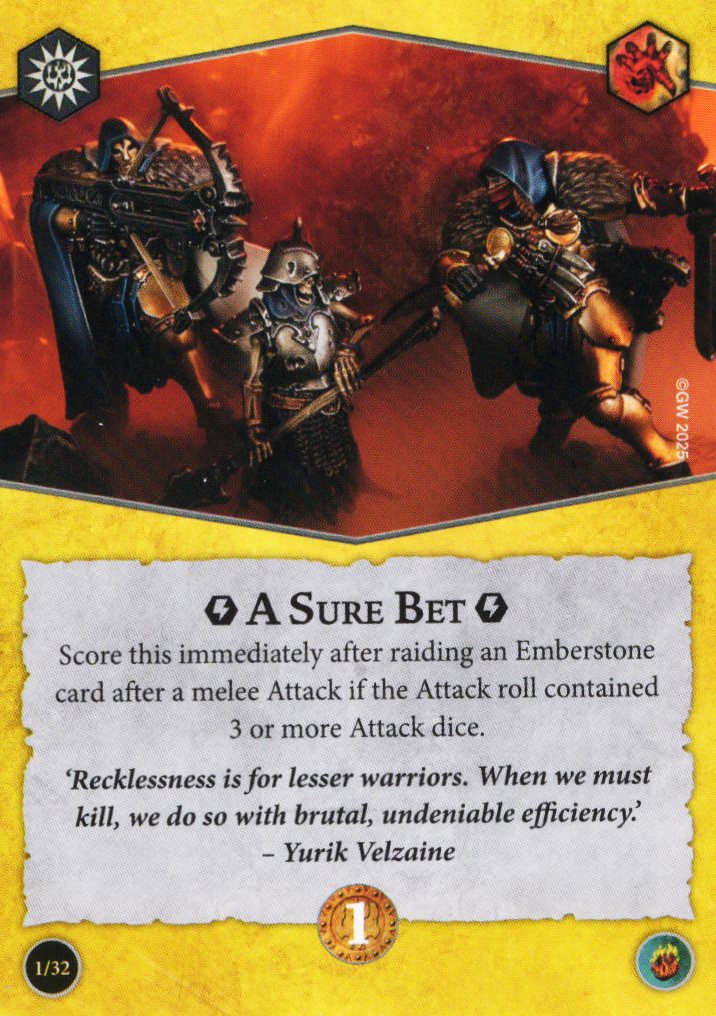

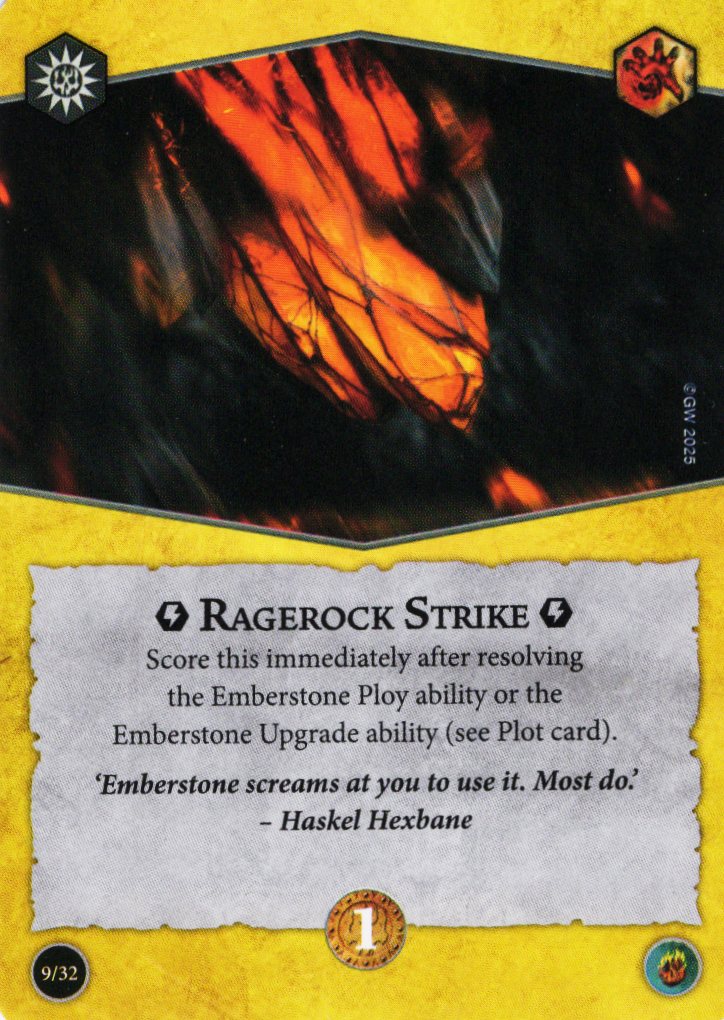
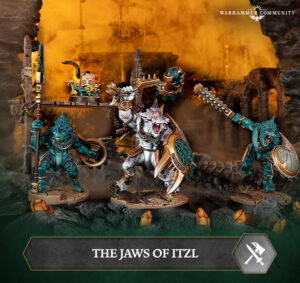
Even if you manage to convince yourself past the concerns with the core mechanic of the deck, it can be hard to build a legitimate Nemesis deck with RR anyway. Even with good matchups and deck sequencing, it is hard to trust more than 3 of the surges the deck offers. Even then, if you don’t have many 3+ Dice melee attacks, you might only be able to take 2. You also run into issues of balancing having enough Emberstone to support your scoring without cutting too many superior power cards from your Rivals deck counterpart. This being the case, you are suddenly pretty limited on the number of decks you can feasibly pair together with RR. The poster child for fixing this problem is, of course, PnP, which will likely be your best option here. In fact, before the most recent FAR update, you could very feasibly create a PnP x RR deck which never had to raid, something I had a lot of fun playing with Jaws. Depending on your warband, there are a couple other decks that can supplement enough surges to be workable, but the fact that you can’t reliably fill in your surges with every other deck in the game—heck, it may be tough to pair up with even half of them—means you often reach for a different, more consistent deck instead.
Conclusion and Proposals for Fixes
While there are certainly things to like here and there in RR, it currently does not make for a consistently competitive deck in the wider Nemesis meta. This is not to say that it can’t compete, just that the meta will always gravitate to something which provides more consistent throughput, particularly when considering that raiding also inherently requires you and your opponent to be interacting frequently. So, how could we go about making it a more attractive pick? Given that the second edition balance updates we’ve seen to-date avoid directly buffing or nerfing cards in the Rivals decks (outside of making corrections, such as adding a surge icon), our best hope is to work on the plot card, much like was done with Countdown to Cataclysm. Of course, in this case, the aim would be to push the power level of the deck up instead of down. Given the raiding construct and overall build of the deck, I think you’d be hard-pressed to come up with a solution which grants it more passivity, so I think the best approach would be to improve the consistency of the Raid ability, which you can accomplish in a number of ways. The proposals I’ve listed below could certainly be combined in some instances, but even just as standalone buffs would be nice quality of life improvements for the deck.
- Remove the “if that card is an Emberstone card” clause from the Raid ability (and delete the corresponding “if that card is not an Emberstone card” text) – This would give you better control of your power deck as a whole, allowing you to leave cards that you want to draw on top of the pile, even if they are not Emberstone cards. Yes, this would be a significant buff, but keep in mind that you are always revealing to your opponent which card you raided, as well as your decision to place it on top or bottom of your deck, so they will know whether or not you have a particular card in your hand and/or when you draw said card into hand. Furthermore, leaving non-Emberstone cards on top of your pile directly contradicts many of the objective cards in your deck which ask you to specifically raid Emberstone cards, so there would still be an innate risk-reward analysis you would need to complete of how much you need to draw that particular card (via Focus or otherwise) vs. how much you need to churn down to some Emberstone cards.
- Change the Raid ability to read “…raid a number of times equal to the printed Bounty characteristic…” – This can be whatever equivalent language is needed to ensure the ultimate interpretation of always being able to raid the first time you make a successful melee attack in a turn. Not being able to raid against raised fighters is borderline game-losing in those particular matchups where it applies, as it unnecessarily provides further disincentive from hitting a raised fighter and can result in you hard-bricking most of the deck’s objective cards if there are not enough un-raised fighters within range. Those fighters can still do pretty much anything your opponent needs to support their own scoring, so it seems only fair to me that the RR player should still be able to execute their own scoring as well by interacting with them. This would lessen (although not totally remove) some of the matchup-dependency of the deck to make it more attractive in a competitive environment. If we can only have one, I would say that this is probably my preferred change.
- Add text to the end of the Raid ability that states “…If you did not reveal the top card of your Power deck, you may instead reveal an Emberstone card from your hand, then place that card face-down on top of your Power deck.” – Again, the wording could probably use some refinement here (particularly in terms of whether this still counts as raiding “one time”), but the point would be to restore the RR player’s ability to raid Emberstone cards to ensure that they can still score their “raid an Emberstone card” objectives in cases where the draw sequencing has not cooperated. While this might seem quite powerful at face value for setting up the surges or Roused Violence, I would argue both that the deck needs the help in that regard and that you’re still expending a resource here. Not only would you be reducing your hand size to set this up, but it would also be done instead of raiding a card, meaning you are essentially making an investment of one raid to improve the efficiency of potential future raids (which may or may not happen if you can’t make enough successful attacks). I guess you might also want some wording here to ensure you can’t place a card on your deck and then immediately raid it if you hit a 2+ Bounty fighter. I’m not sure I’d like to add more complexity to what is already a complex mechanic to execute and track for scoring, but I’ve seen some version of this idea pop up online a few times and figured it was intriguing.
- Add text to the end of the Emberstone Ploy and Emberstone Upgrade abilities that states “…or you may add that card to your hand instead.” – If you’re looking for only a light buff to the deck, this is probably the easiest place to turn. Changing the wording this way would not affect scoring of Ragerock Strike (or any other cards in the deck), but would give you the flexibility to leverage the deck-thinning aspect of RR without needing to immediately burn a valuable power card in a potentially suboptimal way.
Well, that’s all I’ve got for this one. Let me know what you think, I’m always interested in discussing this kind of stuff on social media. Does RR need a buff? Did any of these proposals resonate with you? Do you have any alternative solutions that you think might work better? Whatever the case, we wish you a Happy Thanksgiving and, of course, the best of luck on YOUR Path to Glory!